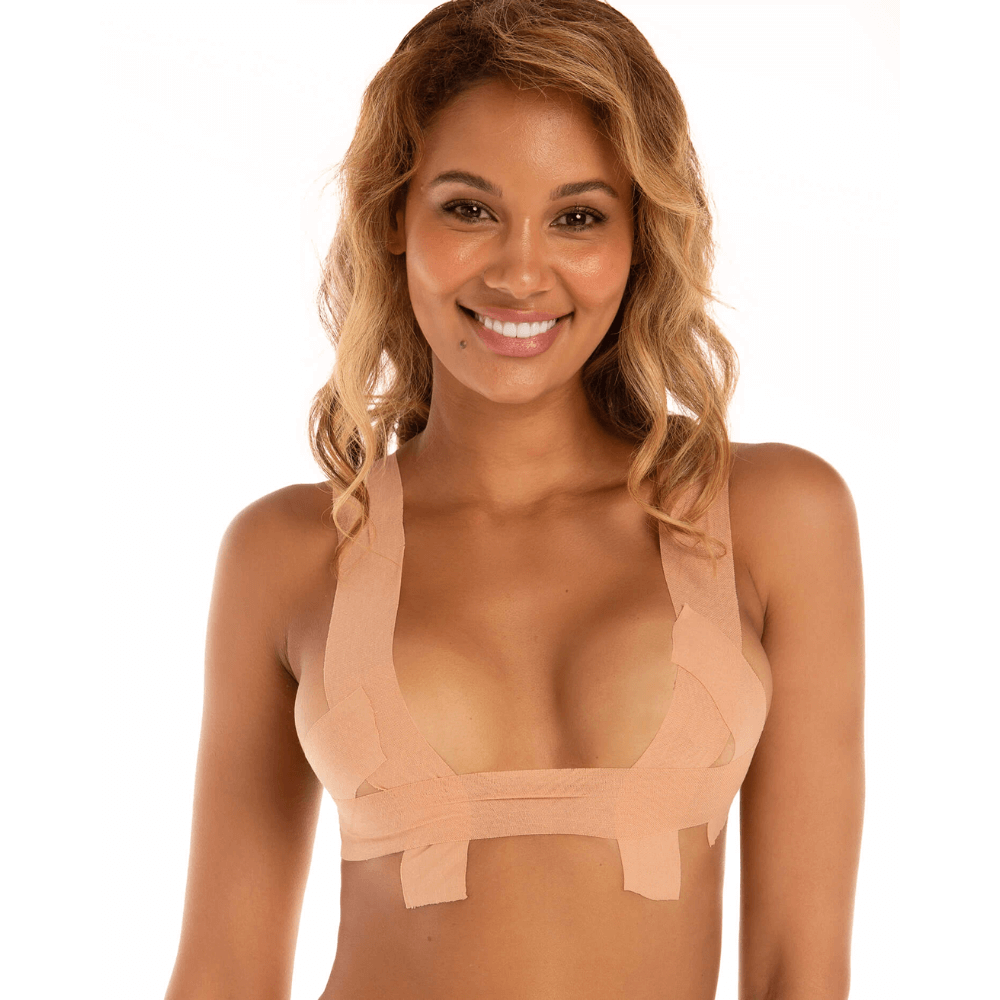


The first time most women take off boob tape, they pull straight downwards in a panic and immediately regret it. Removing adhesive tape from your skin should not be painful. If it is, you have skipped the part of the process that makes it not hurt.
Here are the three methods that work, ranked from gentlest to fastest. All three are painless if you follow the steps. None of them require special products you do not already own.
Why It Hurts When You Do It Wrong
The pain comes from two things: pulling against the natural direction of your skin, and pulling too quickly so the adhesive lifts the top layer of skin with it. The fix for both is the same. Slow the removal down, and let oil or water break the adhesive bond before you pull.
Method 1: The Shower Method (The Gentlest)
This is the method we recommend for first-time tape wearers, anyone with sensitive skin, and anyone who has just spent a long day in tape. The steam, warm water and natural soap residue work together to dissolve the adhesive bond before you pull at all.
Step by step
- Step into a warm (not hot) shower with the tape still on.
- Let the water run directly over the tape for 60 seconds. The adhesive softens.
- Lather a gentle body wash and apply it to the tape edges, working your fingers under the edge.
- Start peeling slowly from one corner, rolling the tape back on itself rather than pulling down.
- Hold the skin firm with your other hand directly below the peel - this stops the skin from being pulled with the tape.
- Continue rolling slowly. If you feel any pull, stop, add more water, and resume.
The whole process takes about 60-90 seconds and is genuinely painless when done in warm water. Skin redness afterwards should be minimal.
Method 2: The Oil Method (When You Cannot Shower)
Useful when you are removing tape away from home - at a hotel, at the office at end of day, or anywhere a shower is not available. Almost any oil works. The job of the oil is to break the adhesive bond chemically rather than mechanically.
What works
- Coconut oil (the most common and effective).
- Baby oil.
- Olive oil (in a pinch).
- Makeup remover oil or cleansing oil.
- Almond oil or jojoba oil.
What does not work
- Water on its own (without showering).
- Alcohol-based products (these strip skin and worsen irritation).
- Body lotion (not enough actual oil content).
Step by step
- Massage a generous amount of oil into the edges of the tape and along the surface.
- Wait 2-3 minutes. The oil seeps under the edges and breaks the adhesive bond.
- Massage more oil in and gently start to peel from one corner.
- Hold the skin firm below the peel.
- Roll the tape back on itself rather than pulling down.
- Reapply more oil any time you feel resistance.
Wipe excess oil off skin with a soft towel afterwards. Some residue is actually nice for the skin to recover.
Method 3: The Slow Peel (The Quickest)
Only recommended for people who have worn tape multiple times and are confident with their skin's reaction. This method does not use oil or water - just careful technique. It works because slow is genuinely painless when done correctly. The pain is in the speed, not in the act of removal itself.
Step by step
- Find one corner of the tape. Lift it slightly with a fingernail.
- Hold the skin below the corner firmly with your other hand.
- Pull the corner back over itself - parallel to your skin, not away from it.
- Peel at a rate of about 1cm per second. Slower if you feel any pull.
- Continue holding the skin firm at the active peel point.
This takes longer than the other two methods (2-3 minutes for a full application) but uses no products. Best for confident users who have skin that tolerates the adhesive well.
What Not to Do
- Do not pull straight down. Pulling away from skin lifts the skin with the tape. Always roll the tape back on itself.
- Do not rip it off fast. The Band-Aid-style fast pull works on a 2cm Band-Aid. It does not work on a 20cm strip of body tape - the surface area is too large.
- Do not skip the prep. Five seconds of water, oil, or warming up the tape with your palm beats 30 seconds of painful pulling every time.
- Do not use solvents. Nail polish remover, rubbing alcohol, or other harsh chemicals will damage your skin barrier far more than the tape ever could.
Aftercare
Even with perfect removal, your skin has just had hours of adhesive contact and a slow peel. Treat it kindly for the next few hours.
- Rinse the area with cool water.
- Pat dry, do not rub.
- Apply a fragrance-free moisturiser, aloe vera gel, or a light unscented body oil.
- Avoid tight bras, sweat, and direct sun on the area for at least 2 hours.
- Wait at least 24 hours before applying more tape or a sticky bra to the same skin.
For more detail on day-to-day use of tape, our application guide walks through how to put it on so removal is easier later. And if you are deciding between tape and adhesive bras for your next event, our boob tape collection and stick on bra collection cover both options.
If Your Skin Reacts After Removal
Some redness after removal is normal and fades within an hour. If you have raised welts, a distinct rash, or burning, do not apply tape to that skin again. Most tape reactions are to a specific adhesive type rather than to tape in general, so switching brands often solves it. If the reaction is severe, see a pharmacist or doctor.
The Short Version
Painless tape removal is a three-part formula. Soften the adhesive (with shower steam or oil), hold the skin firm below the peel point, and roll the tape back on itself slowly. Done correctly, the tape comes off cleanly with no pain and only minor redness. The pain people remember from cheap tape and bad technique is not a tape problem - it is a method problem.